Category: Uncategorized

  • No-Spend Challenge: Save Money in 30 Days

    No-Spend Challenge: Save Money in 30 Days

    💡 What is a No-Spend Challenge?

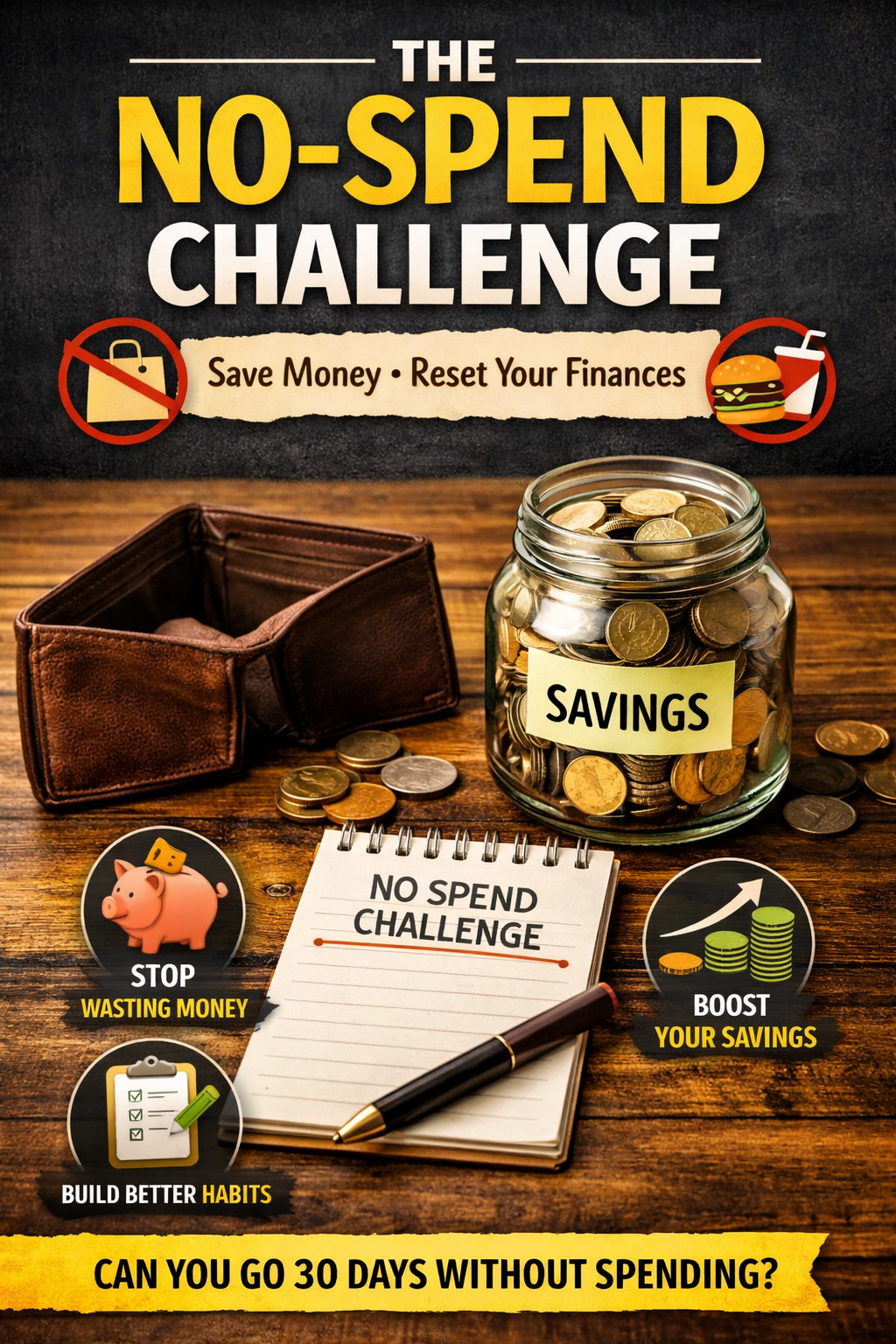
    A No-Spend Challenge is a set period of time (like 7 days, 14 days, or even 30 days) where you avoid all unnecessary spending.

    You only spend money on essentials such as:

    • Rent or EMI
    • Groceries
    • Utilities
    • Medical needs

    Everything else—shopping, dining out, online orders—is paused.


    🎯 Why Try a No-Spend Challenge?

    • Helps you break bad spending habits
    • Increases your awareness of where money goes
    • Boosts your savings quickly
    • Builds discipline and self-control

    It’s like a financial detox for your wallet!


    🗓️ How to Start the Challenge

    1. Choose Your Duration

    Start small if you’re new:

    • 7 days (beginner)
    • 14 days (intermediate)
    • 30 days (advanced)

    2. Set Clear Rules

    Decide what counts as “essential” and “non-essential.”

    ✔ Allowed:

    • Groceries
    • Bills
    • Transport

    ❌ Not Allowed:

    • Online shopping
    • Eating out
    • Entertainment subscriptions

    3. Plan Ahead

    Before starting:

    • Stock up on groceries
    • Pay pending bills
    • Plan meals in advance

    This helps avoid unnecessary spending during the challenge.


    🛠️ Tips to Succeed

    🏠 Cook at Home

    Avoid ordering food. Try simple, budget-friendly meals.

    📵 Avoid Temptation

    • Uninstall shopping apps
    • Avoid browsing online stores
    • Stay away from sales and offers

    🎮 Find Free Activities

    • Watch movies at home
    • Go for a walk
    • Spend time with family

    📝 Track Your Progress

    Write down:

    • Money you didn’t spend
    • Things you avoided buying

    This keeps you motivated.


    💰 How Much Can You Save?

    Even small expenses add up. For example:

    • ₹200/day on snacks & coffee = ₹6,000/month

    Imagine saving this amount just by being mindful!


    🌱 What You’ll Learn

    By the end of the challenge, you’ll:

    • Understand your spending triggers
    • Realize what you truly need
    • Build long-term saving habits

    ✨ Final Thoughts

    The No-Spend Challenge is not about restriction—it’s about awareness and control. It teaches you that you don’t need to spend money to enjoy life.

    Start with just 7 days and see the difference. You might be surprised how much you save—and how good it feels!


    Call to Action:
    Are you ready to take the challenge? Start your No-Spend journey today and take the first step toward financial freedom!


  • Rich vs Smart Spending

    A Budget Buddy Perspective


    Being rich is about how much you spend.
    Being smart is about how wisely you spend.

    This blog will help you understand the difference and guide you toward a better financial lifestyle.


    What is “Rich Spending”?

    Rich spending is when you spend money to show status, impress others, or follow trends, often without thinking about long-term impact.

    Examples:

    • Buying expensive clothes just for brand names
    • Upgrading phones every year without need
    • Spending heavily on parties or lifestyle to impress
    • Taking loans for luxury items

    Problem:

    Rich spending may give temporary happiness, but it often leads to:

    Debt

    Financial stress

    No savings


    What is “Smart Spending”?

    Smart spending means using your money intentionally and wisely, focusing on value rather than appearance.

    Examples:

    • Buying quality products that last longer
    • Comparing prices before purchasing
    • Investing in skills, education, or health
    • Saving and budgeting regularly

    Benefit:

    Smart spending builds:

    • Financial stability
    • Long-term wealth
    • Peace of mind

    Rich vs Smart Spending (Quick Comparison)

    AspectRich Spending Smart Spending
    FocusShowing offValue & utility
    Decision StyleEmotionalLogical
    ImpactShort-term satisfactionLong-term benefits
    SavingsLow or noneHigh priority
    Financial HealthRiskyStable

    Why Smart Spending Wins

    Smart spending doesn’t mean you can’t enjoy life. It simply means:

    You control your money
    Your money doesn’t control you

    It allows you to:

    • Enjoy guilt-free spending
    • Build savings and investments
    • Handle emergencies easily

    Tips to Become a Smart Spender

    1. Follow the 50-30-20 Rule

    • 50% Needs
    • 30% Wants
    • 20% Savings

    2. Ask Before Buying

    “Do I need this or just want this?”

    3. Avoid Impulse Purchases

    Wait 24 hours before buying non-essential items.

    4. Track Your Expenses

    Use apps or simple notes to monitor spending.

    5. Focus on Value, Not Price

    Cheap isn’t always better—value matters more.


    Conclusion

    Being rich is not about expensive things—it’s about financial freedom.

    Smart spending helps you live a balanced life where you enjoy today while securing tomorrow.

    Remember:
    “Don’t aim to look rich. Aim to be financially smart.”

  • Use 50-30-20 Rule” FOR BUDGTE

    Use the 50-30-20 Rule

    A Smart Budget Buddy Guide

    What is the 50-30-20 Rule?

    It’s a simple and powerful budgeting method that helps you manage your money without stress.

    Divide your income into 3 parts:

    • 50% – Needs
    • 30% – Wants
    • 20% – Savings

    1. 50% for NEEDS

    These are your essential expenses (you must pay these):

    • Rent / Hostel fees
    • Groceries
    • Electricity & bills
    • Transport
    • Basic education costs

    Tip: Keep this under control—don’t let “needs” become “wants.”


    2. 30% for WANTS

    This is your lifestyle spending (things you enjoy):

    • Eating out
    • Shopping
    • Netflix / subscriptions
    • Travel & fun

    Tip: Enjoy life—but don’t overspend here.


    3. 20% for SAVINGS

    This is your future security:

    • Emergency fund
    • Investments
    • Savings account
    • Paying off debts

    Tip: Pay yourself first—save before you spend!


    Example (For Students / Beginners)

    If you earn ₹10,000/month:

    • ₹5,000 → Needs
    • ₹3,000 → Wants
    • ₹2,000 → Savings

    Simple. Clear. Effective.


    🔹 Why This Rule Works

    ✔ Easy to follow
    ✔ No complex calculations
    ✔ Helps build saving habit
    ✔ Keeps balance between life & money


    🔹 Budget Buddy Advice

    “Don’t try to be perfect. Just start. Even small savings make a big difference.”

  • Expense Tracking: The Smart Way to Control Your Money

    In today’s fast-paced lifestyle, money often slips away without us even noticing. That ₹50 chai, ₹200 Swiggy order, or impulse shopping deal—it all adds up. Expense tracking is not about restricting your life; it’s about understanding where your money goes and making smarter decisions.

    The Concept Behind Expense Tracking

    Imagine this scene

    A modern workspace with a clean desk setup. A smartphone displays an expense tracking app filled with colorful pie charts and bar graphs. Indian rupee notes (₹500, ₹200) are placed beside it. A cup of coffee sits calmly on the side, symbolizing a balanced lifestyle. Soft lighting creates a focused, minimal, and productive mood.

    This image represents clarity, control, and conscious spending.


    Why Expense Tracking Matters

    1. Awareness is Power

    Most people don’t realize how much they spend daily. Tracking helps you see the truth—no guessing, just facts.

    2. Stops Unnecessary Spending

    When you know every rupee is being recorded, you naturally avoid wasteful expenses.

    3. Helps You Save More

    Tracking shows patterns—like overspending on food, subscriptions, or shopping—so you can cut back smartly.

    4. Reduces Financial Stress

    Money stress often comes from uncertainty. Expense tracking gives clarity and peace of mind.


    What an Expense Tracking App Shows

    When you open an expense tracking app, you typically see:

    • Pie Charts → Category-wise spending (food, travel, shopping)
    • Bar Graphs → Weekly or monthly spending trends
    • Daily Logs → Small expenses you usually forget
    • Budget Alerts → Notifications when you overspend

    This data helps turn chaos into a clear financial picture.


    The Psychology Behind It

    Tracking expenses changes your mindset:

    • You become more mindful before spending
    • You start questioning “Do I really need this?”
    • You shift from emotional spending → intentional spending

    It’s not about being cheap—it’s about being smart.


    Lifestyle Angle

    Expense tracking doesn’t mean cutting out everything you love.

    Instead:

    • Enjoy your coffee —just don’t overspend daily
    • Order food —but track how often
    • Shop —but within limits

    It’s about balance, not sacrifice.


    Practical Tips to Start

    • Track every expense (even ₹10)
    • Update daily (takes just 2 minutes)
    • Categorize properly
    • Set a weekly spending limit
    • Review your data every Sunday

    Real-Life Example

    Let’s say you spend:

    • ₹150 daily on snacks = ₹4500/month

    Tracking helps you realize:
    You can cut it to ₹80/day
    Save ₹2100/month effortlessly

    That’s the power of awareness.


    Conclusion

    Expense tracking is not just a habit—it’s a lifestyle upgrade.
    It gives you control, confidence, and clarity over your money.

    Start small. Stay consistent.
    And soon, you’ll see your savings grow without feeling restricted.

  • SMART BUDGET LIFESTYLE

    A Budget Buddy Project

    What is a Smart Budget Lifestyle?

    A smart budget lifestyle focuses on:

    • Spending wisely, not restricting yourself completely
    • Saving consistently for future goals
    • Avoiding unnecessary debt
    • Making conscious financial decisions

    In simple words:
    “Spend smart today so you don’t stress tomorrow.”


    Importance of Smart Budgeting

    • Reduces financial stress
    • Helps achieve goals (travel, car, house)
    • Builds savings and emergency funds
    • Prevents overspending and debt

    Key Principles

    1. Track Your Expenses

    Know where your money goes every month.
    Example: food, shopping, transport, subscriptions

    2. Follow the 50-30-20 Rule

    • 50% → Needs (rent, groceries)
    • 30% → Wants (entertainment, shopping)
    • 20% → Savings

    ✔️ 3. Differentiate Needs vs Wants

    • Need = Essential (food, rent)
    • Want = Optional (new phone, branded clothes)

    ✔️ 4. Build an Emergency Fund

    Save at least 3–6 months of expenses

    ✔️ 5. Avoid Impulse Buying

    Wait 24 hours before making non-essential purchases


    🔹 5. Smart Saving Tips

    • Use discount apps & offers
    • Buy during sales only when needed
    • Cook at home instead of eating out daily
    • Use public transport or carpool
    • Cancel unused subscriptions

    🔹 6. Smart Spending Habits

    • Compare prices before buying
    • Choose quality over quantity
    • Set monthly spending limits
    • Use cash or UPI mindfully (not blindly spending)

    🔹 7. Budget Tools & Methods

    • Budget tracking apps
    • Monthly budget planner
    • Expense tracker sheets
    • Envelope method (cash system)

    🔹 8. Common Mistakes to Avoid

    • ❌ Not tracking expenses
    • ❌ Spending first, saving later
    • ❌ Relying too much on credit
    • ❌ Ignoring small expenses (they add up!)

    🔹 9. Conclusion

    A smart budget lifestyle is not about sacrificing happiness—
    it’s about creating freedom and control over your money.

    “Small smart choices today = Big financial success tomorrow.”

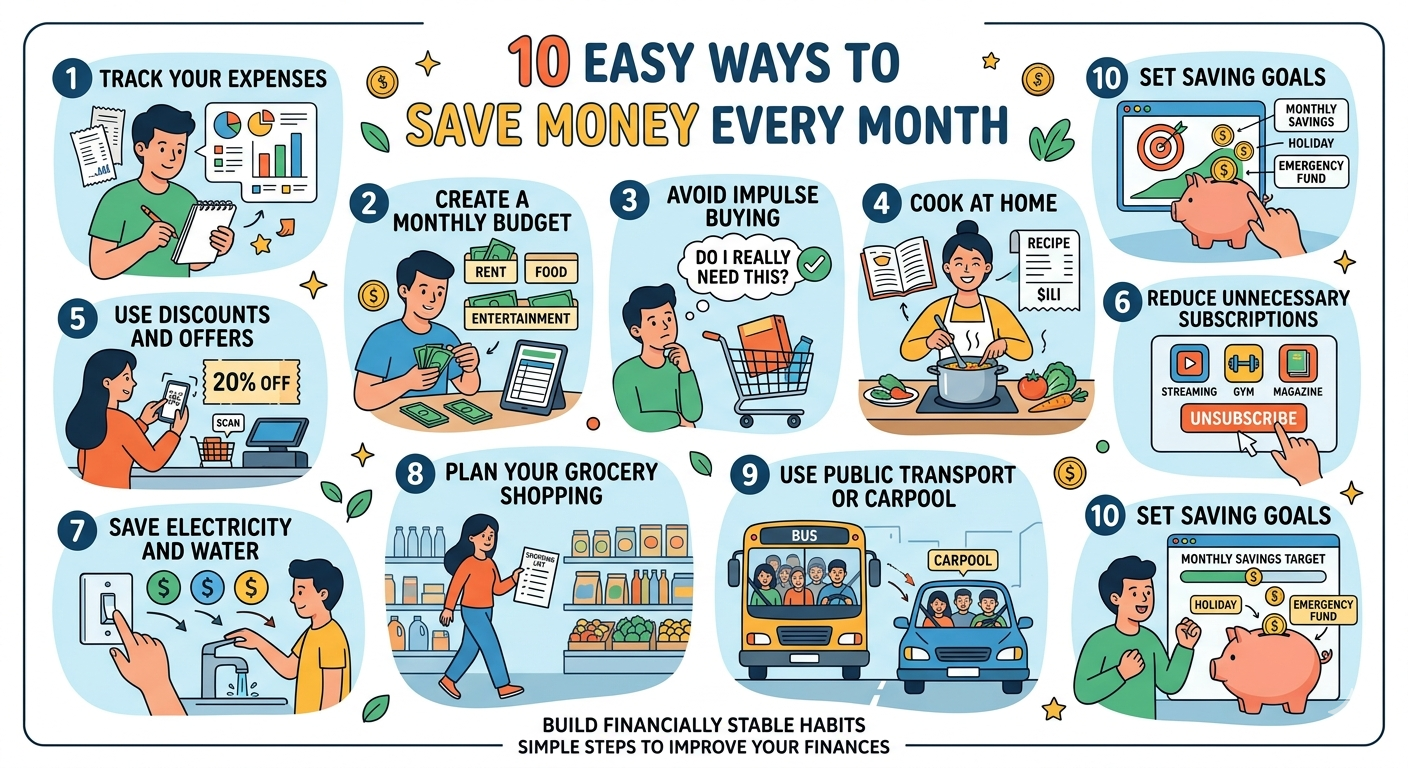
  • 10 Easy Ways to Save Money Every Month

    10 Easy Ways to Save Money Every Month

    Introduction

    Managing money can be challenging, especially when expenses keep increasing. However, saving money does not require big sacrifices. By following simple and smart habits, you can easily save money every month and improve your financial stability.

    1. Track Your Expenses: Start by understanding where your money is going. Keep a record of your daily expenses. This will help you identify unnecessary spending and control it.

    2. Create a Monthly Budget: Plan your income and expenses. Divide your money into categories like rent, food, savings, and entertainment. A proper budget helps you stay financially organized.

    3. Avoid Impulse Buying: Before buying anything, ask yourself if you really need it. Avoid making decisions based on emotions or offers. This simple habit can save a lot of money.

    4. Cook at Home: Eating outside frequently can be expensive. Cooking at home is not only healthier but also more budget-friendly. Plan your meals to save more.

    5. Use Discounts and Offers: Look for discounts, cashback offers, and sales while shopping. However, only buy what you actually need.

    6. Reduce Unnecessary Subscriptions: Cancel subscriptions that you don’t use regularly, such as apps or memberships. This helps in reducing monthly expenses.

    7. Save Electricity and Water: Turn off lights, fans, and appliances when not in use. Small steps like these can significantly reduce your utility bills.

    8. Plan Your Grocery Shopping: Make a list before going shopping and stick to it. Avoid buying extra items that are not required.

    9. Use Public Transport or Carpool: Travelling smartly can save fuel costs. Use public transport or share rides whenever possible.

    10. Set Saving Goals: Set a monthly saving target. Having a goal keeps you motivated and disciplined with your money.

    Conclusion: Saving money is all about consistency and smart choices. Start with small steps and gradually build better financial habits. Over time, these small changes will make a big difference in your life. creat a image

    The current image has no alternative text. The file name is: Gemini_Generated_Image_9qzoof9qzoof9qzo.png
  • Hello world!

    Welcome to WordPress. This is your first post. Edit or delete it, then start writing!